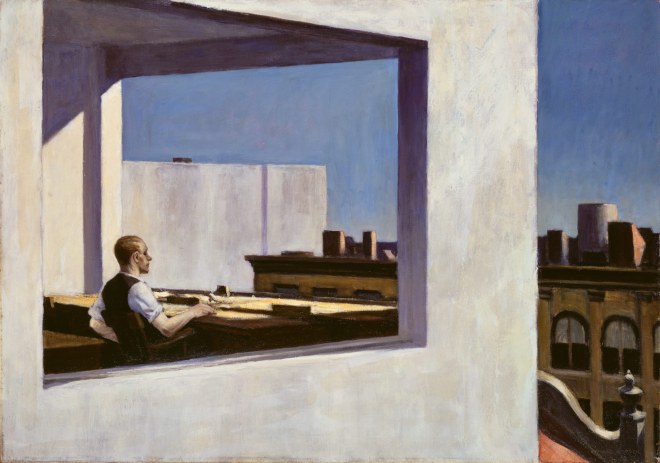
As far back as I remember, there used to be this silly thing that I was accustomed to doing when I was feeling particularly sad. I would think to myself, ‘if I disappeared, or had never existed, would the lives of those around me be any different?’ The answer invariably was a resounding no. Maybe my parents would experience a different sort of life, but I was incapable of seeing how my presence had in any way impacted the lives of friends and acquaintances that I had known at the time.
I know, pretty dark stuff for a kid, but for some reason, it’s where my mind often went. I’ve always been prone to loneliness; a sentiment that could be triggered by the smallest of reasons. Being ignored by friends at school, a weekend spent not talking to anyone, a girl I liked showing no interest in me; the list was endless. Sometimes it didn’t even need a reason to arise, I’d just be sitting there, and it would hit me, a tidal wave of solitude that drenches me in sadness. I would get over it, of course. I always did. But eventually it just became a part of who I am.
—
I turn thirty in a couple of months, and despite my many attempts to not think of it as anything but another number, the expectations associated with the mere adjustment of the tens digit in a tiny number loom rather large. I can already see several of my friends reading this and rolling their eyes in exasperation. Oh, you have no idea how wrong you are, I can hear them say, and I completely agree; I look at people making a big deal of turning 20 or 25, and I chuckle in the same knowing way. It’s just hard to see it from someone else’s perspective, I get it, it’s fine.
But the fact is, I’m turning thirty, and I’ve never felt lonelier in my life. It’s a hard thing to admit, because you think that during all those years, you’d have accrued a certain amount of connections that would make you feel part of something. So when you feel lonely, it comes associated with a feeling of failure, because you haven’t managed to cultivate those connections, and here you are, at a point where it feels too late, too hopeless to try to change that.
There are friends who will read the aforementioned and feel upset or hurt. I would hope that they wouldn’t feel that way, because they know that I do care about them a great deal and appreciate them immensely. And I know they care too. But, life’s funny like that; my group of close friends are now each in a different country, or caught up in the many obligations that come with being married with kids. I don’t begrudge them any of that; it’s just the way things go, that’s just life, etc. But I also won’t deny that it feels rather terrible to think about it and feel like you’ve made a mistake somewhere along the way, and here you are on your own. When you go days or weeks without anyone checking up on you, it’s hard not to feel a little sad.
I’ve felt some version of this for a year or two now, but it seems like the rapidly approaching three-oh wanted to kick the feeling into high gear. Egypt is doing its damndest to seem like the worst place to be, and one’s attempts at living in denial keep gradually getting eroded in the face of daily disappointments. Every month brings with it another friend packing their bags and shuffling off to seek something different. And you just find yourself wondering, what am I doing? Is it the right thing? Am I just wasting my time here? What do I want? Would leaving bring me happiness, or would I just go experience loneliness in a new place? you start feeling resentful, and then you feel guilty about feeling that way. The thoughts just keep swirling in your mind, without a clear answer, and the possibility of entering a new decade of your life without that clear answer brings with it yet another feeling of failure. The failure of loneliness, and the failure of ennui, mixed up with a not insignificant amount of anxiety, tangle together into a rubberband ball of very bad feelings that don’t go away.
Perhaps you’ll look at this and think it’s a problem of perspective. But when you’re feeling lonely, and the future is unclear, and you think you shouldn’t be feeling that way when you’re turning thirty, the lens through which you see life gets rather distorted, and things get rough. Even the things that you usually manage to say to others to help them through their own rough spots ring hollow in your ears, because your brain tells you it’s all bullshit, and you’re just trying to lie your way out of it. Gonna have to try harder than that, buddy. I know all the tricks.
I struggled a lot with saying all these things. It sounds incredibly whiny, I thought. Your pride gets in the way, because you don’t want to seem so vulnerable and weak. Nobody wants others to think they’re feeling purposeless and lost. But, what the hell, I said, if I’m feeling a certain way, I’ll just say it. I can’t both feel the lack of human connection and deny myself the right to express it. That’s just too cruel, and there’s enough cruelty in the world without inflicting it upon ourselves.
—
By some sheer coincidence, I found myself going through a fair bit of media lately that deals with loneliness. Be it reading Bluets by Maggie Nelson and seeing her experience loneliness through the lens of her fascination with the color blue, or listening to Moses Sumney’s Aromanticism (which I’m listening to as I write this actually) and experiencing the various struggles that come with accepting loneliness and living with it.
But perhaps the most affective of them has been The Lonely City by Olivia Laing, a book that I haven’t even finished yet, but which has already managed to leave its indelible mark upon me. In it, Laing talks about her own feelings of loneliness when she uprooted her life in England and moved to New York for a lover who ended up having second thoughts, and then she utilizes those feelings as a jumping off point to talk about various artists such as Edward Hopper and Andy Warhol, and how their loneliness made itself apparent in their lives and works of art.
And for me, there is a note of hope there; sure, perhaps loneliness isn’t something that’ll eventually go away. Maybe it is, as I said in the beginning, has become part of who I am. But perhaps that’s not all bad. Maybe you learn to get through the tough parts of it, and maybe it helps you gain a deeper knowledge of yourself and thus express yourself better. Maybe you manage to establish some sort of working arrangement, an understanding of sorts. Maybe, in time, it stops being such a fucking drag.
Maybe.

 mazloumest.com